

Choosing the right hedge trimmer can be the difference between a quick, satisfying job and a frustrating, exhausting task—especially if your yard is home to thick, stubborn hedges. Many people wonder if corded or battery hedge trimmers are better for these tough jobs.
With so many models and features, it’s easy to get lost in the details. This guide will help you understand the key differences, compare real-world performance, and point out the common mistakes many buyers make.
By the end, you’ll have a clear answer for your own garden needs, backed by expert advice and practical data.
Hedge Trimmers You Can Buy


Understanding Thick Hedges

Before comparing trimmers, it’s important to know what makes a hedge “thick.” Thick hedges have dense branches, often with woody stems over 1/2 inch in diameter.
Examples include privet, laurel, hawthorn, and some conifers. Cutting these hedges needs more power and tougher blades than what you’d use for light shrubs or ornamental bushes.
Thick hedges can quickly dull weak trimmers, jam blades, or overheat motors. That’s why the right equipment is essential—not just for neat results, but also for safety and tool longevity.
Also Read: Carbon Steel Vs Stainless Steel Trowel Durability
Corded Hedge Trimmers: Strengths And Weaknesses
Corded hedge trimmers have been a staple for decades. They run on electricity from your home, usually through a 50- to 100-foot cord. Let’s break down the key factors.
Power And Performance
Corded models are known for steady, reliable power. Most offer 3.5 to 4.5 amps of motor strength, which translates to consistent blade movement even in thick growth.
Unlike battery models, they don’t slow down as the job goes on. This is critical for thick hedges, where a drop in blade speed can cause jams or uneven cuts.
Blade Strength And Size
Corded trimmers often have longer blades (20 to 26 inches) and wider tooth gaps (up to 3/4 inch), allowing them to cut thick branches in a single pass. For thick hedges, look for blade gaps of at least 5/8 inch to avoid struggling with dense stems.
Weight And Handling
Most corded trimmers weigh 5 to 8 pounds, lighter than gas models but sometimes heavier than battery trimmers. The cord itself adds a challenge, as you need to keep it out of the way to avoid accidental cutting.
Operation Time
A key advantage: unlimited run time. As long as you have power, the trimmer will keep going—no waiting for batteries to recharge.
Limitations
However, the cord is both a blessing and a curse. It keeps power flowing but limits movement. Large yards or hedges far from outlets may be impossible to reach without extension cords. There’s also a real risk of cutting the cord, which is dangerous and can damage the tool.
Cost
Corded trimmers are usually more affordable, with quality models ranging from $50 to $120. Lower price often means fewer features, but for basic power, they are hard to beat.
Battery Hedge Trimmers: Modern Convenience And Power

Battery-powered hedge trimmers have improved dramatically in recent years. Advances in lithium-ion battery technology now allow these tools to rival, and sometimes surpass, corded models—especially in garden flexibility.
Power And Performance
Modern battery trimmers offer 20V to 80V power, with high-end models matching the cutting strength of corded trimmers. The best units can cut branches up to 3/4 inch thick. However, cheaper models may struggle with dense wood, so battery voltage and amp-hours (Ah) matter.
Blade Strength And Size
Battery trimmers usually have blades from 18 to 24 inches, with tooth gaps similar to corded models. Top options include hardened steel blades that resist dulling, a must for frequent thick hedge trimming.
Weight And Handling
Batteries add weight, especially on large-capacity models, bringing total weight to 6 to 10 pounds. However, there’s no cord to manage, making it easier to move around large or complex hedges.
Operation Time
This is where battery trimmers can fall short. Most offer 30 to 60 minutes of runtime per charge. Cutting thick hedges drains batteries faster—sometimes in as little as 20 minutes. High-capacity batteries (4.0Ah or above) can stretch this, but they are expensive and heavier.
Charging And Downtime
Charging a battery takes 45 minutes to 2 hours. Many users buy a second battery to swap in, but this adds to the cost. Forgetting to charge means delays, which can be frustrating during big jobs.
Cost
Battery trimmers are usually more expensive than corded models, especially when buying extra batteries. Good units range from $100 to $250, with premium brands costing more.
Side-by-side Comparison: Corded Vs Battery For Thick Hedges
To help you compare, here’s a side-by-side look at the most important features for thick hedge trimming:
| Feature | Corded Hedge Trimmer | Battery Hedge Trimmer |
|---|---|---|
| Power Output | Consistent, 3.5–4.5 amps | Variable, 20V–80V (depends on model) |
| Blade Length | 20–26 inches | 18–24 inches |
| Blade Gap | Up to 3/4 inch | Up to 3/4 inch |
| Run Time | Unlimited | 30–60 minutes per charge |
| Weight | 5–8 lbs | 6–10 lbs |
| Mobility | Limited by cord | Very high |
| Maintenance | Low | Low |
| Cost | $50–$120 | $100–$250+ |
Real-world Scenarios: Which Is Better For Thick Hedges?
Let’s look at what happens when you actually use each type on tough hedges.
Scenario 1: Large, Overgrown Privet Hedge
A thick, neglected privet hedge, 30 feet long, with 3/4 inch branches. The job will take about an hour.
- Corded trimmer: Handles the job well, never slowing down. The cord is a hassle, especially when moving ladders or working far from the outlet. However, you never lose power.
- Battery trimmer: If you have a high-voltage, 4.0Ah battery, you can finish the job in one charge, but a lower-end battery might run out halfway. Power may dip near the end of the charge, making the last cuts harder.
Scenario 2: Multiple Short, Thick Hedges Around A Large Yard
You have five thick hedges scattered across a 1/4-acre yard.
- Corded trimmer: You constantly move the cord, and often need an extension to reach distant hedges. The cord gets tangled around bushes and garden furniture.
- Battery trimmer: You move freely from hedge to hedge, finish each one quickly, and only need to swap batteries if you have a lot of cutting. Total job time is shorter because you’re not fighting the cord.
Scenario 3: Tall Hedges Requiring A Ladder
Tall, thick hedges (over 6 feet) need trimming with a ladder.
- Corded trimmer: The cord can be a safety hazard. You must watch your footing and make sure the cord doesn’t tangle.
- Battery trimmer: No cord means safer work on the ladder, and it’s easier to reach awkward spots.
What Matters Most When Choosing For Thick Hedges?
When you’re focused on thick hedges, some features matter much more than others. Here’s what to prioritize:
1. Motor Power
Cutting strength is critical. For corded models, look for at least 4 amps. For battery models, choose at least 40V and a high-capacity battery (2.5Ah or more). Weak motors will stall or jam on thick stems.
2. Blade Gap
A wider blade gap lets you cut larger branches. For thick hedges, 5/8 inch is the minimum. Some premium trimmers go up to 3/4 inch. Narrow gaps (3/8–1/2 inch) are not enough for tough jobs.
3. Blade Quality
Hardened steel blades stay sharp longer and resist bending. Laser-cut, dual-action blades make cleaner cuts and reduce vibration, which matters if you’re working for more than 10–15 minutes.
4. Weight And Balance
Heavier tools cause fatigue quickly, especially on tall or wide hedges. Check the weight with the battery installed—not just the bare tool. Good balance makes a big difference in comfort.
5. Safety Features
Look for two-handed safety switches, blade covers, and lock-off buttons. For corded models, a cord lock helps prevent accidental unplugging or cutting.
6. Warranty And Support
Hedge trimmers take a beating on thick hedges. A solid 2–3 year warranty is important, and easy access to service centers can save you money in the long run.
Common Buyer Mistakes (and How To Avoid Them)
Many people buy the wrong hedge trimmer for thick hedges, leading to frustration and wasted money. Here are mistakes to avoid:
- Choosing by price alone: Cheap models often have weak motors and small blade gaps. Spending a little more usually gives much better results.
- Ignoring battery specs: Some battery trimmers come with small, low-capacity batteries that are fine for light work but useless for thick hedges.
- Underestimating runtime: Battery trimmers may need a spare battery for big jobs. If you only have one, you’ll face long delays.
- Overlooking cord length: For corded models, check if you have outlets near all your hedges. Otherwise, plan on buying a heavy-duty extension cord.
- Skipping blade maintenance: Dull blades struggle with thick branches. Clean and oil your blades after every use.
Real User Experiences: Insights You Might Miss
Most buyers focus on power and price, but two less obvious factors matter a lot with thick hedges:
- Noise level: Corded and battery trimmers are much quieter than gas models, but battery trimmers are usually slightly quieter than corded. This makes a difference if you have noise-sensitive neighbors or want to work early in the morning.
- Startup time: Battery trimmers are ready to go instantly—no searching for outlets or untangling cords. This makes short, frequent trims much less of a hassle.
Maintenance Differences
Both types are low-maintenance compared to gas tools, but there are a few differences:
- Corded trimmers: Wipe down and oil the blades, check the cord for cuts, and store dry. No batteries to manage.
- Battery trimmers: In addition to blade care, you need to charge and store batteries properly. Avoid leaving batteries in extreme heat or cold, which can shorten their life.
How Do Battery And Corded Models Stack Up Over Years?
Battery trimmers usually need a new battery after 3–5 years. Replacement batteries can cost $40–$80 or more, depending on brand and capacity. Corded trimmers have fewer parts to wear out, so they often last longer if not abused.
If you want a tool that will last a decade with little extra cost, corded models are the safer bet. If you’re comfortable replacing batteries every few years, battery trimmers offer more freedom.
Best Use Cases For Each Type
To summarize, here’s where each trimmer shines for thick hedges:
| Situation | Corded Trimmer | Battery Trimmer |
|---|---|---|
| Small yard, outlets nearby | Excellent | Very good |
| Large yard, scattered hedges | Poor | Excellent |
| Tall or awkward hedges (with ladder) | Fair, cord is a hassle | Excellent, safer |
| Very long trimming sessions | Excellent, unlimited run time | Good, if you have extra batteries |
| Budget-friendly choice | Excellent | Fair, extra batteries add cost |
| Quick, frequent trims | Good | Excellent, no setup |
Environmental And Noise Considerations
Both types are much cleaner than gas trimmers—no fumes, less noise, and no engine maintenance. However, battery trimmers have a slight advantage in sound level (typically 85–90 dB vs. 90–95 dB for corded), making them more comfortable for extended use.
On the eco side, corded trimmers draw power directly from the grid, while battery trimmers use energy stored in batteries, which eventually need recycling. For most users, the difference is small, but it’s worth noting if you’re trying to minimize environmental impact.
For more details on decibel levels and environmental impact, you can check resources like the U.S. Environmental Protection Agency.
When To Choose Gas Instead
If your hedges are extremely thick (over 1 inch in branch diameter), or you have hundreds of feet of dense hedges, neither corded nor battery trimmers may be enough. In these rare cases, gas-powered trimmers are still the most powerful, but they are heavier, noisier, and require more maintenance.
Practical Buying Tips
- Try the tool in-store if possible. Hold it at shoulder height for 30 seconds to test comfort.
- Ask about battery compatibility. Some brands use the same battery for many tools, which can save money if you expand your tool collection.
- Check for replacement parts (blades, batteries) before buying, especially for less common brands.
- Read real user reviews for your chosen model, focusing on people who have thick hedges.
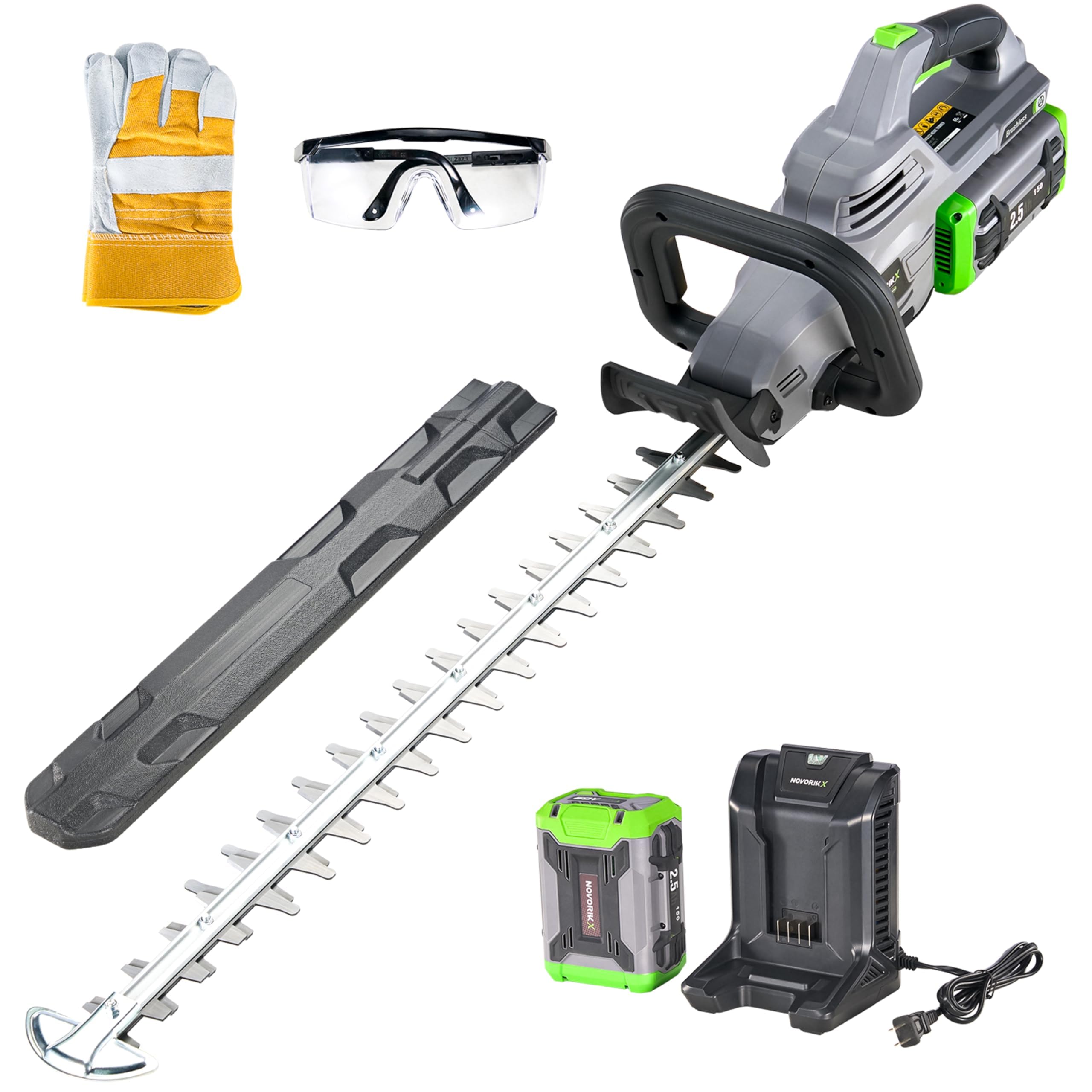
Credit: www.amazon.com
Frequently Asked Questions
What’s The Biggest Advantage Of A Battery Hedge Trimmer For Thick Hedges?
The main advantage is freedom of movement. You can trim hedges anywhere in your yard without worrying about the cord, making it much easier to handle large or awkwardly placed hedges. Modern high-voltage battery models also deliver enough power for most thick branches.
How Long Does A Battery Hedge Trimmer Last On Thick Hedges?
Cutting thick hedges uses more power, so even a strong battery trimmer may only run 20–40 minutes per charge. This depends on battery size (Ah), voltage, and the density of your hedge. Keeping a spare battery on hand can help you finish large jobs without interruption.
Are Corded Hedge Trimmers Safe For Use On A Ladder?
Corded trimmers can be used on ladders, but the cord adds risk. It can tangle, pull, or cause a trip hazard. If you must trim tall hedges, a battery trimmer is safer and easier to manage.
Can A Corded Or Battery Trimmer Cut Branches Over 3/4 Inch?
Most corded and battery hedge trimmers are designed for branches up to 3/4 inch thick. For anything larger, you’ll need manual loppers or a small chainsaw. Forcing the trimmer on bigger branches can damage the tool and dull the blades quickly.
Is Maintenance Different For Corded Vs Battery Hedge Trimmers?
Both types need regular blade cleaning and oiling. Battery trimmers require extra care for the batteries—store them in a cool, dry place and avoid leaving them on the charger too long. Corded trimmers only need cord inspection and general cleaning.
Picking between a corded and a battery hedge trimmer for thick hedges comes down to your yard’s layout, your tolerance for cords, and how much cutting you do at once. Corded models are reliable and affordable for heavy, constant work near outlets.
Battery models give unmatched flexibility and safety, especially for large or complex gardens. With the right choice, thick hedges become much less of a chore, and your equipment works with you—not against you.

Sabbir Ahmed is an experienced gardener and the lead voice behind GardenToolsGuide.com, where he combines over 15 years of hands-on horticultural expertise with a passion for sustainable cultivation. Specializing in organic soil health and permaculture, Sabbir has dedicated his career to testing and refining the best methods for maintaining thriving green spaces. His mission is to simplify the complexities of gardening by providing practical, tool-focused advice that helps fellow enthusiasts—from beginners to seasoned pros—grow nutrient-dense food and beautiful landscapes with efficiency and ease.